
Paralyzed while awake. Part 1
Studies of volunteers paralyzed while awake have provided us with some valuable insights

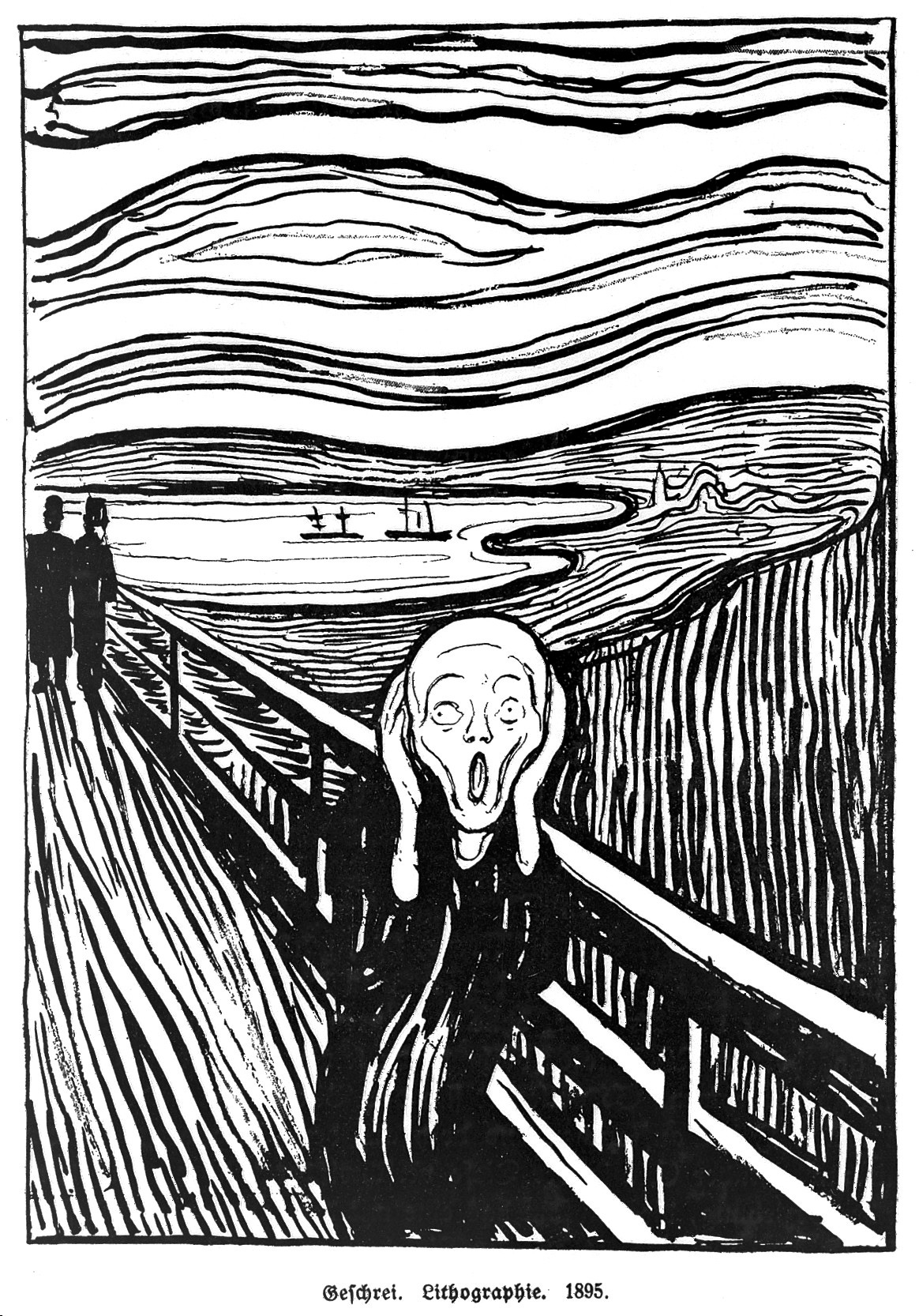
This is a 2 part post on experiments with paralysis in awake volunteers. In the first part, we will briefly review a few of these experiments, and in the second part we will focus on the experiments that involved the bispectral index (BIS).
We generally think of being paralyzed while awake as resulting from an error in anesthetic administration. For example, inadvertent failure to deliver propofol during a total intravenous anesthetic was documented in a case report by a physician who was paralyzed but awake during surgery. Needless to say, she was not pleased—
“I could feel the cool iodine being sponged onto my abdomen. I was terrified as I realized I had sensation and was going to feel the surgery. I was not sure if it would be possible to survive through the pain of a whole operation…”
In this post we want to examine something quite different, which is deliberately paralyzing awake volunteer subjects to perform a scientific study. Interestingly, this has been done a few times, and the results have provided valuable insights.
In 1970 Ali, Uting and Gray published a landmark paper in the British Journal of Anaesthesia that established the usefulness of train-of-four twitch monitoring. They performed a number of experiments, one of which involved administration of 5 mg of tubocurarine to unanesthetized volunteers, followed by measurement of their response to train-of-four twitch. Three of the volunteers had no change in train-of-four twitch response, but 7 developed fade, along with double vision, slurred speech and difficulty opening their eyes.
In 1989, Pavlin, Holle and Schoene administered d-tubocurarine to 6 unanesthetized volunteers (including themselves), in order to measure their ability to swallow, perform a Valsalva, maintain their airway and approximate their teeth. At a depth of paralysis that resulted in airway obstruction, and the need for assistance in maintaining an airway, the volunteers could still generate a negative inspiratory pressure of at least -25 mmHg and a normal end tidal PCO2, demonstrating the relative preservation of diaphragm function at a time when airway muscles were incapacitated. The volunteers experienced anxiety associated with partial airway obstruction and difficulty swallowing secretions.
In 2003, Messner et al paralyzed three unanesthetized volunteers (themselves) and measured the effect on bispectral index (BIS). They studied an early version of BIS (3.31). Succinylcholine was used to induce paralysis and facial muscle electromyography (EMG) was measured separately from BIS. Under conditions of complete or partial suppression of facial muscle EMG, the BIS declined to a nadir that ranged from 9 to 64. No record of the raw EEG was made. We will take up a further discussion of this paper in Part 2 of this post.
In 2015, Schuller et al paralyzed 10 volunteer anesthesia providers with succinylcholine followed by rocuronium. They inflated a blood pressure cuff on the arm to exclude the neuromuscular blocking drugs (“isolated forearm”) and allow communication with the volunteers who could respond to questions with hand signals. They measured the BIS with 2 different BIS monitors and also recorded raw EEG with a conventional 22 channel EEG machine. They reported results similar to Messner et al, finding that BIS declined substantially during paralysis with either succinylcholine or rocuronium. Interestingly, when the raw EEG from this study was reinterpreted by the Entropy EEG monitor, the results were similar, with awake volunteers generating Entropy numbers typical of anesthetized patients.
In a separate paper published in 2024, these investigators reported the subjective experience of the volunteers in the 2015 study in some detail. Interestingly, paralysis from succinylcholine was perceived as “a profound heaviness throughout the body” whereas rocuronium was perceived as “indistinguishable from lying comfortably at rest”. Anxiety was common and one volunteer remarked,
“I honestly felt that I was going to die”
The authors concluded,
“If a fully informed anesthesiologist can be transformed in seconds into a panicked state where they think they are “going to die,” consider the patient who is totally unprepared for the experience, has no comprehension of what has occurred, and no way to control it.”
Very recently, Snoek et al published a study in which they paralyzed healthy volunteers with a rocuronium infusion until they had symptoms, including double vision, in order to study the effects of rocuronium on the acute hypoxic ventilatory response (mediated by the carotid body). Six volunteers withdrew from the study due to either “panic reaction” or “discomfort”. This was actually a follow-up study to a previous similar study in which volunteers had various symptoms including double vision, difficulty swallowing, upper airway obstruction and ptosis at a targeted train-of-four ratio of 0.7 during rocuronium infusion.
In addition to these studies from the anesthesia literature, there have been a number of studies of volunteers paralyzed awake published in the physiology literature. An example can be found here.
In Part 2 we will consider the thorny problem of why awake volunteers may have unexpectedly low BIS or Entropy numbers when paralyzed awake.