
Smallpox was transmitted through the air. What about its cousin, mpox (formerly known as “monkeypox”)?
What do we know about airborne transmission of mpox?

Recently we posted about smallpox, the importance of a major smallpox epidemic during the American revolutionary war, and airborne transmission of smallpox—

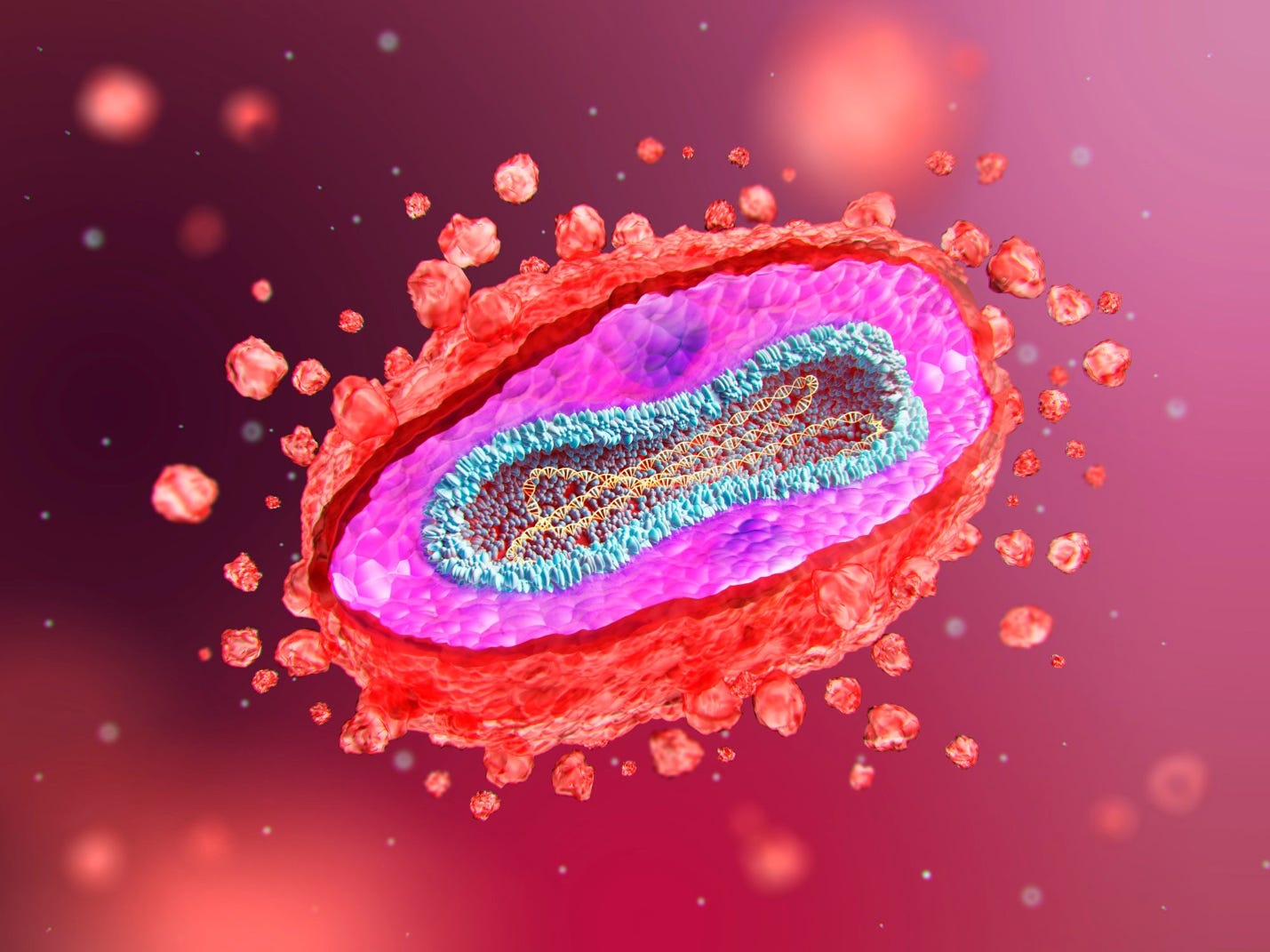
Smallpox is currently eradicated from the world, except for samples kept in secure (hopefully) laboratories. However, a cousin of smallpox has been making headlines. This is mpox (previously known as monkeypox). Similar but less virulent (at least for the moment) than smallpox, mpox is a DNA virus in the orthopoxvirus family. Unlike smallpox, which had no animal reservoirs, mpox is a zoonotic virus, found primarily in small mammals.
The more virulent clade I mpox has been found in the United States
There are 2 main “clades” (clades are genetically similar families of viruses descending from a single ancestor) of mpox, clade I and clade II. Clade I is generally believed to be more virulent and dangerous, with a case fatality rate of around 10%. Previous outbreaks of mpox in the United States were clade II, but recently, several cases of clade I mpox not associated with overseas travel were identified in the United States, raising a concern about possible community spread of clade I.
Outbreaks of mpox in the United States have been associated with sexual contact between men. However, it is important to note that this may be a coincidence, and does not mean that transmission is limited to sexual contact. Like smallpox, mpox may have multiple routes of transmission, including airborne respiratory transmission.
Evidence for and against airborne transmission
In a recent article, Beeson et al reviewed the evidence for and against airborne transmission of mpox. Evidence from animal studies and limited evidence from humans suggests that infection and transmission via the respiratory route are possible. I won’t repeat the details here—the article is quite thorough. However, epidemiological evidence from case studies does not point to human to human airborne transmission. Thus at the current time, airborne transmission appears to be possible but uncommon.
Mpox is very stable in on surfaces and in the air
Beeson et al also reviewed evidence showing that mpox is very stable in the environment, and can be retrieved from surfaces and air samples. For example, culturable virus was found on household surfaces 15 days after an infected person had left the area, and culturable virus could be found suspended in the air for at least 90 hours in a laboratory experiment.
The CDC recommends airborne precautions
Interestingly, the Centers for Disease Control and Prevention (CDC) recommends that health-care personnel wear a respirator with N95 or higher-level filters, in addition to a gown, gloves, and eye protection, when entering the rooms or care areas of patients with suspected or confirmed mpox.
There are vaccines
Since eradication of smallpox virus, routine vaccination against smallpox was discontinued (during the period from 1971-1980), leaving all of those not previously immunized against smallpox vulnerable to infection by smallpox or mpox. There are vaccines available that are effective against smallpox and mpox. These vaccines were developed and stockpiled because of the possibility that smallpox could be used as a bioweapon. Coincidentally, these vaccines may be useful for dealing with outbreaks of mpox.
Stay tuned, this story is not over.
.