
“The Big One”
Epidemiologist Michael Osterholm reviews the lessons learned from the COVID-19 pandemic and describes how we should prepare for the next one, especially “The Big One”

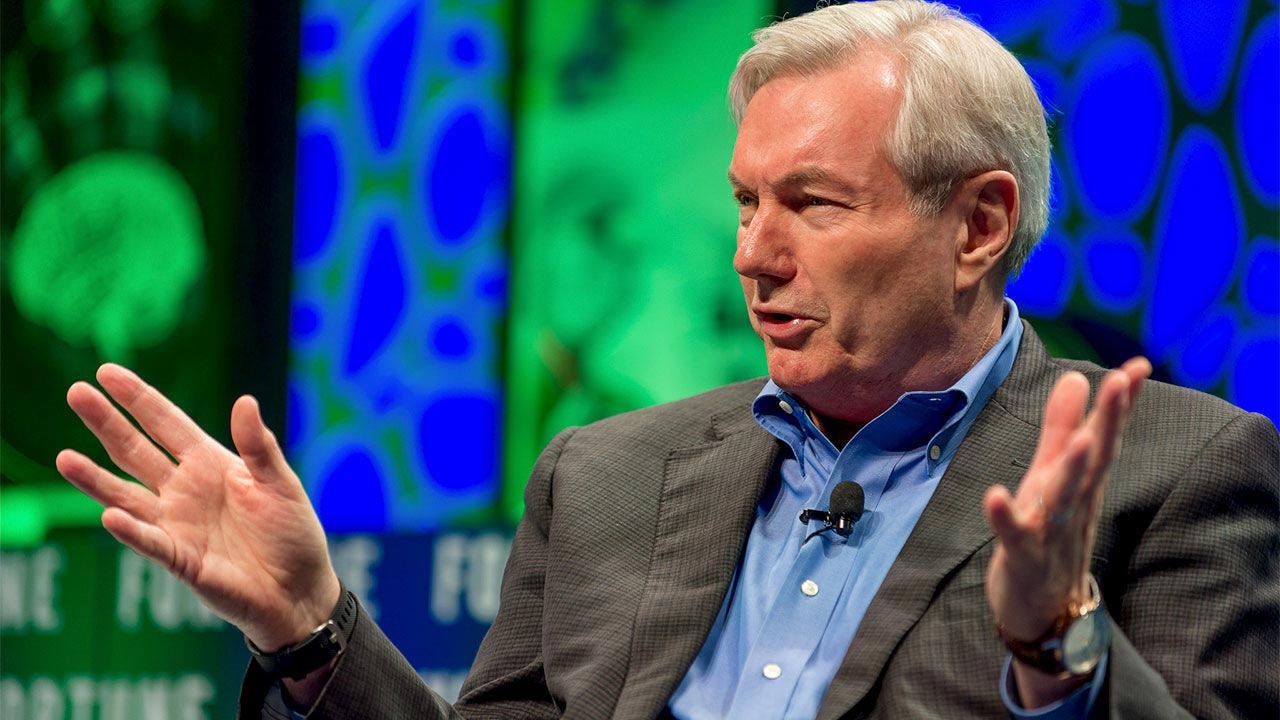
Michael Osterholm PhD,MS,MPH is Regents Professor, McKnight Presidential Endowed Chair in Public Health, the director of the Center for Infectious Disease Research and Policy (CIDRAP), Distinguished Teaching Professor in the Division of Environmental Health Sciences, School of Public Health, a professor in the Technological Leadership Institute, College of Science and Engineering, and an adjunct professor in the Medical School, all at the University of Minnesota. He is also a member of the National Academy of Medicine (NAM) and the Council of Foreign Relations.
It’s March 10, 2020. The COVID-19 pandemic has barely begun. Dr. Michael Osterholm appears on the Joe Rogan podcast. During a 90-minute interview, Osterholm correctly predicts, in broad strokes, with astonishing foresight, what is about to happen. Not surprisingly, Rogan appears somewhat stunned.
Fast forward to 2025. Osterholm and his coauthor Mark Olshaker have recently published a phenomenal book entitled “The Big One”.
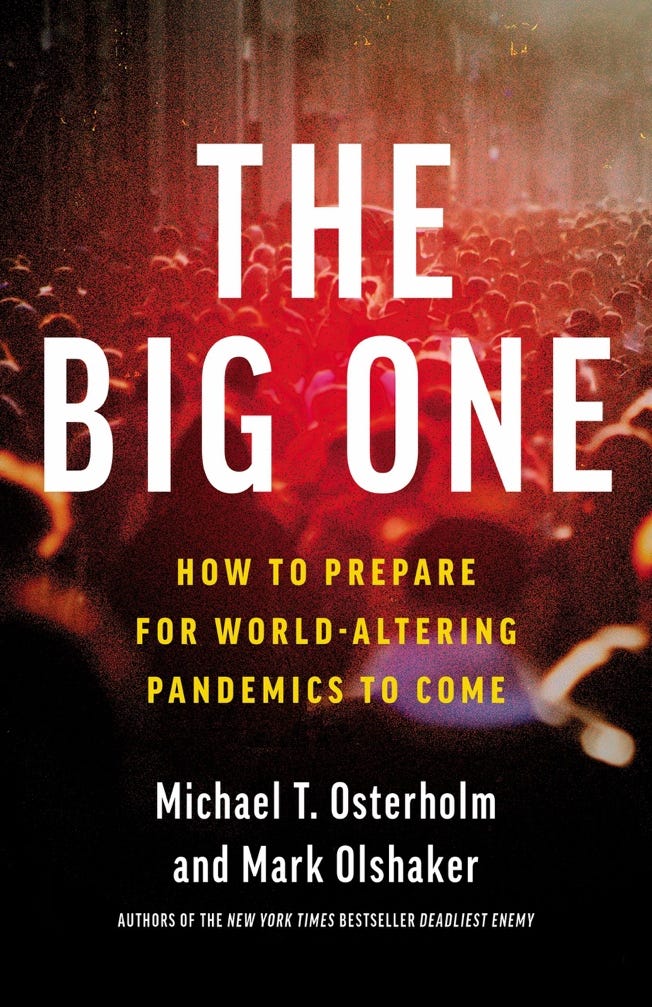
I want you to read this book. I am not going to summarize or comprehensively review its contents. But I want to emphasize a few points that underlie the key messages of the book.
1. What is “The Big One”? The Big One is a pandemic caused by a virus with both very high infectivity (person to person transmission) AND a high mortality rate. This virus could be a coronavirus, an influenza virus, or some other virus. The coronaviruses that were the immediate predecessors to SARS-CoV-2 (the virus of the COVID-19 pandemic) namely SARS and MERS, were very deadly, with mortality rates in roughly the 30% range, but thankfully they were not highly transmissible, and did not result in pandemics. However, there is no a priori reason that a coronavirus or other virus could not be BOTH highly deadly and highly transmissible. This nightmare virus is “The Big One”.
2. Another pandemic is coming. This is a certainty agreed upon by epidemiologists and virologists everywhere.
What do we need to do to prepare for the next pandemic, especially “The Big One”?
1. We need much better vaccines. The current COVID and influenza vaccines are good vaccines for preventing severe disease, hospitalization and death. But they are not very good for preventing infection in the first place and the duration of protection from these vaccines is relatively short, resulting in the need to repeat vaccination at least annually. We need to pour money into research that will result in vaccines that are universally effective against major classes of viruses, such as influenza and coronaviruses, that are highly effective for preventing infection and that are durable, conferring protection that lasts for years, not months. Currently, we are doing the opposite, reducing the resources devoted to vaccine research. There is widespread agreement between epidemiologists, virologists and vaccinologists that we need a “moonshot” effort to develop vaccines.
2. While we are developing better vaccines, we need to improve on our ability to remove viruses from the air we breathe. The transmission of respiratory viruses is primarily through the air—the viruses are airborne. Purifying air in our indoor spaces through filtering, fresh air exchange and the use of ultraviolet light can reduce our exposure to viruses. Short of re-engineering our indoor air, which is a long-term goal, we can wear respirators, like N-95s in situations where we are at risk of becoming infected. Currently available N-95 respirators are good but could be made better. Loose fitting masks such as surgical masks and cloth masks are relatively ineffective—we need to focus on using respirators. We published an article in Anesthesiology in 2021 in which we described how reusable, elastomeric respirators could have value in a pandemic—”Elastomeric Respirators for COVID-19 and the Next Respiratory Virus Pandemic: Essential Design Elements”(Dr. Lisa Brosseau, a colleague of Michael Osterholm at CIDRAP was a coauthor of this article). We need to develop better respirators and we need to stockpile them for use in a pandemic.
3. We need better anti-viral drugs. Vaccines that prevent infection would make anti-viral drugs a moot point, but anti-viral drugs are certainly part of our armamentarium. For example, paxlovid is an effective, although perhaps underutilized, anti-viral for SARS-CoV-2.
While we all suffer from COVID fatigue we just can’t afford to switch off our scientific interest in pandemic viruses. Another pandemic is coming, possibly The Big One, and we need to be ready. Read the book. Write your representatives in government.
To Michael Osterholm—as they say in Japan—Otsukaresama—“thanks for your hard work”.